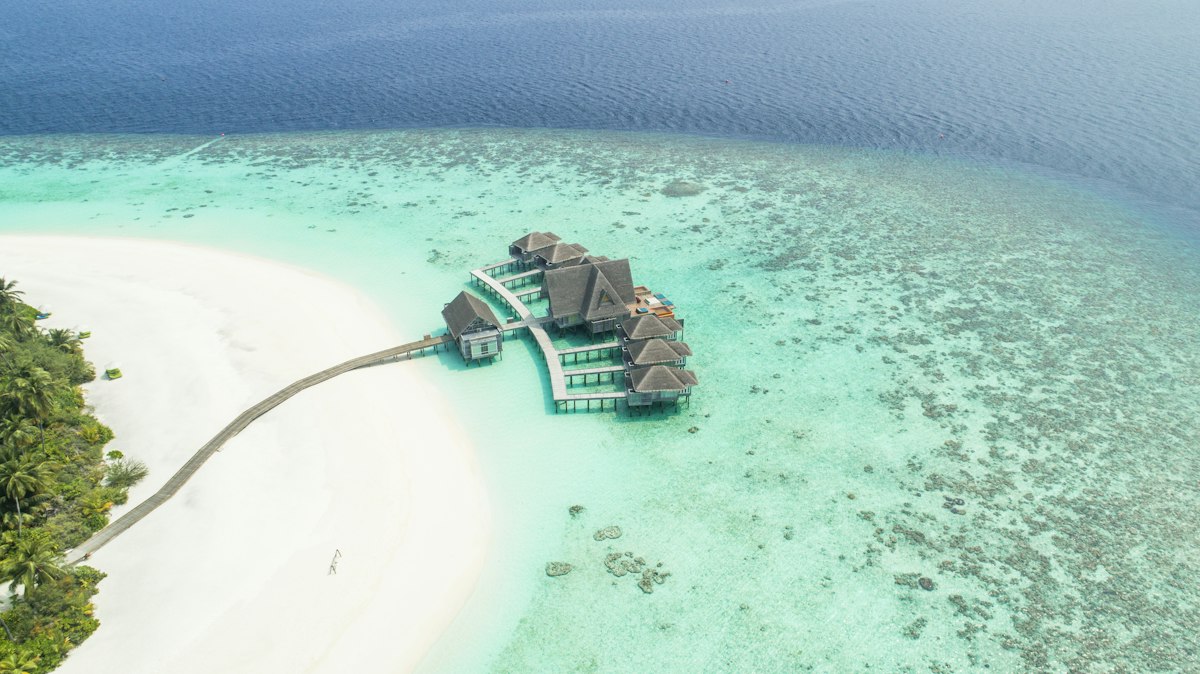
Why Mauritius Has Become the World's Most Coveted Relocation Destination
There is a reason the world's most discerning families, entrepreneurs and retirees are quietly packing their lives and moving to a 2,040-square-kilometre island in the Indian Ocean. Mauritius is not merely a holiday postcard — it is a politically stable, bilingual, fiscally intelligent jurisdiction that offers a quality of life few nations can rival. In 2026, the island's appeal has only sharpened: a modernised immigration framework, world-class healthcare, a growing international school ecosystem, and a flat 15 per cent personal income tax rate with no capital gains tax, no wealth tax and no inheritance tax.
This guide is written for those who are serious about making the move. Whether you are a tech founder seeking a low-friction base, a retired executive craving ocean-front serenity, or a family looking for safety, sunshine and superb education — this is your operational playbook.

Understanding Your Visa Options
Mauritius offers several pathways for foreign nationals. Choosing the right one depends on your profile, income source and long-term intentions.
The Premium Visa (formerly Premium Travel Visa)
Introduced during the pandemic and refined since, the Premium Visa allows non-citizens to live in Mauritius for up to one year, renewable. It targets remote workers, retirees, and individuals with income sourced outside Mauritius. Key requirements:
- Valid passport with at least 12 months remaining
- Proof of travel and health insurance covering Mauritius
- Evidence of sufficient funds or regular income (bank statements, employment letter, pension documentation)
- No minimum income threshold is formally gazetted, but the Economic Development Board (EDB) typically expects demonstrable monthly income of at least USD 1,500
- Processing time: approximately 10–15 business days online
The Premium Visa does not grant tax residency automatically. You must spend at least 183 days in Mauritius within a tax year (1 July – 30 June) to be considered tax resident.
The Occupation Permit (OP)
For those who intend to work, invest or run a business from Mauritius, the Occupation Permit is the cornerstone instrument. It combines work and residence into a single permit. Three sub-categories exist:
- Investor: minimum initial investment of USD 50,000 transferred to a local business bank account
- Professional: must hold a contract with a Mauritius-based employer; minimum basic monthly salary of MUR 60,000 (approximately USD 1,350)
- Self-Employed: must generate annual income of at least USD 35,000 from activities in Mauritius
Occupation Permits are issued for up to 10 years and are renewable. After three years of continuous residence, OP holders may apply for a Permanent Residence Permit.
Retired Non-Citizen Permit
Designed for retirees aged 50 and above, this permit requires:
- Monthly transfer of at least USD 1,500 into a local Mauritian bank account
- Valid health insurance
- Initial permit for 10 years, renewable
This pathway is particularly popular among British, French and South African retirees drawn by the island's climate, safety and healthcare infrastructure.
Permanent Residence Permit (PRP)
Available after three years of continuous residence under an OP, or through a direct investment route. The investment-linked PRP requires a minimum of USD 375,000 in approved sectors (real estate under specific schemes, or business investment). The PRP is valid for 10 years.
Your Relocation Timeline: 6 to 12 Months
Relocating to Mauritius is not an overnight affair. Here is a realistic timeline for a well-prepared move:
| Phase | Timeline | Key Actions |
|---|---|---|
| Research & Decision | Months 1–2 | Visit Mauritius (ideally 2–3 weeks), explore neighbourhoods, visit schools, meet tax advisors |
| Legal & Immigration | Months 2–4 | Engage immigration lawyer, gather documents, submit visa/OP application |
| Financial Setup | Months 3–5 | Open Mauritian bank account (MCB, SBM, AfrAsia), transfer initial funds, set up international insurance |
| Housing | Months 4–6 | Secure rental or purchase property; sign lease, arrange utilities |
| School Enrolment | Months 3–6 | Apply to international schools (admission cycles start January–March for September intake) |
| Logistics | Months 5–8 | Ship personal belongings, arrange pet relocation if needed, notify home-country authorities |
| Arrival & Settling | Months 8–12 | Arrive, complete biometrics, obtain local SIM/fibre, register with embassy, find your rhythm |
Cost of Living: A Detailed Breakdown
Mauritius is significantly more affordable than London, Paris, Dubai or Singapore — yet the quality of life is comparable for those who choose wisely. Here is a realistic monthly budget for a family of four living a comfortable, upper-middle-class lifestyle:
Housing
- Luxury villa (3–4 bed, pool, Grand Baie/Tamarin): MUR 80,000–200,000/month (USD 1,800–4,500)
- Modern apartment (2–3 bed, Ébène/Moka): MUR 35,000–70,000/month (USD 800–1,600)
- IRS/RES/PDS property purchase: from USD 375,000 (grants PRP eligibility)
Education
- International schools: MUR 150,000–500,000/year per child (USD 3,400–11,400)
- French-system lycée: MUR 80,000–200,000/year per child
Healthcare
- GP consultation (private): MUR 800–1,500 (USD 18–35)
- Specialist consultation: MUR 1,500–3,000 (USD 35–70)
- International health insurance (family): USD 5,000–15,000/year depending on cover
Food & Dining
- Groceries (family of 4): MUR 25,000–45,000/month (USD 570–1,025)
- Fine dining (per person): MUR 2,500–5,000 (USD 57–114)
- Local restaurant: MUR 300–800 per person
Transport
- New SUV (Toyota RAV4, Hyundai Tucson): MUR 1,500,000–2,500,000 (USD 34,000–57,000) — vehicles are expensive due to import duties
- Fuel: approximately MUR 74/litre (USD 1.70)
- Domestic help/driver: MUR 12,000–20,000/month
Utilities & Telecom
- Electricity & water: MUR 3,000–8,000/month
- Fibre internet (100 Mbps): MUR 1,500–2,500/month
- Mobile (unlimited data): MUR 500–1,200/month
Neighbourhoods: Where to Live by Profile
For Families: Moka and Bagatelle
The Moka Smart City has become the beating heart of modern Mauritius. Home to international schools (Northfields, Le Bocage), shopping centres (Bagatelle Mall), medical facilities, and beautifully landscaped residential enclaves, Moka offers a suburban quality of life with excellent connectivity. The cooler highland climate is a bonus.
For Retirees: Grand Baie and Péreybère
The northern coast remains the preferred zone for retirees. Grand Baie offers a vibrant social scene with yacht clubs, restaurants, boutique shopping, and easy access to the best beaches. Péreybère is quieter, more residential, and offers superb value for beach-proximity living.
For Entrepreneurs: Ébène Cybercity and Floréal
Ébène Cybercity is the island's main business district — a cluster of modern office towers housing banks, tech companies, and global business corporations. Living nearby in Floréal or Rose Hill puts you minutes from your office, with the cultural richness of Curepipe and the highlands at your doorstep.
For the Ultra-Luxury Buyer: Rivière Noire (Black River) and Tamarin
The west coast is where Mauritius' most exclusive IRS and PDS developments sit — think Anahita, Villas Valriche, and the new Heritage Villas. Tamarin offers a surfer-meets-sophistication vibe with stunning mountain-and-ocean vistas. Sunsets here are legendary.
For the Adventurous: Rodrigues
Mauritius' autonomous island dependency, Rodrigues, is attracting a small but growing community of eco-conscious expats seeking radical simplicity. Internet connectivity has improved, but this is for those who genuinely want to unplug.
Banking in Mauritius
Opening a bank account is straightforward once you hold a valid visa or permit. The main banks used by expats are:
- MCB (Mauritius Commercial Bank): the largest and most established; excellent online banking, multi-currency accounts, wealth management arm (MCB Private Banking)
- AfrAsia Bank: popular among UHNW clients; strong private banking services, Global Business account expertise
- SBM (State Bank of Mauritius): competitive rates, good for everyday banking
- Bank One: CEGOS-affiliated, modern digital banking interface
Documents typically required: passport, proof of address (home country and Mauritius), visa/OP, proof of income or source of funds, and a completed KYC form. Expect the process to take 2–4 weeks including compliance checks.
Pro tip: Open your Mauritian bank account during your reconnaissance trip. Some banks allow the process to begin remotely, but finalising in person speeds things up dramatically.
Telecom and Internet
Mauritius has two main telecom operators: Emtel and my.t (Mauritius Telecom). Fibre-to-the-home coverage has expanded significantly, with speeds of 100 Mbps to 1 Gbps available in most urban and peri-urban areas. For remote workers and entrepreneurs, connectivity is rarely a bottleneck.
5G rollout began in 2024 and coverage is expanding across the island. Prepaid SIM cards are available at the airport upon arrival — bring your passport.
Essential Documents Checklist
- Passport (valid 12+ months)
- Birth certificates (apostilled)
- Marriage certificate (if applicable, apostilled)
- Police clearance certificate (from country of residence, less than 6 months old)
- Medical certificate
- Proof of income / bank statements (6–12 months)
- Proof of health insurance
- School records for children
- Driving licence (international driving permit recommended for first 6 months)
- Pet vaccination records and import permit (if applicable)
The Intangibles: What Numbers Cannot Capture
Beyond the logistics, Mauritius offers something increasingly rare in our hyper-connected, hyper-anxious world: genuine peace. The island's cultural mosaic — Hindu, Creole, Chinese, Muslim, European — creates a society that is remarkably tolerant and warm. Crime rates are low. The political system, modelled on Westminster, has delivered uninterrupted democracy since independence in 1968.
Your children will grow up bilingual (English and French are the lingua francas), with exposure to multiple cultures and cuisines. They will swim in turquoise lagoons before school and learn that the world is far larger — and far kinder — than the headlines suggest.
For retirees, the pace is gentle but never boring. Golf courses, deep-sea fishing, hiking in the Black River Gorges, weekends in Rodrigues, or simply reading on your veranda with a vanilla tea — life here is what you make it.
For entrepreneurs, the regulatory environment is business-friendly, the time zone (GMT+4) bridges Europe, Africa, the Middle East and Asia, and the talent pool — while small — is educated, multilingual and hungry.
"I moved to Mauritius expecting a two-year experiment. Five years later, I cannot imagine living anywhere else. The quality of life per dollar spent is simply unmatched." — A French tech entrepreneur based in Tamarin
Final Thoughts
Relocating to Mauritius in 2026 is not a leap of faith — it is a calculated, well-supported move backed by a mature immigration system, modern infrastructure, and a government that actively courts international talent and capital. The island is not perfect: bureaucracy can be slow, imported goods carry duties, and the island's small scale means that some niche services simply do not exist. But for those who value safety, fiscal efficiency, natural beauty, and a genuinely multicultural community, Mauritius remains in a class of its own.
Start your journey with a reconnaissance trip. Walk the neighbourhoods. Visit the schools. Sit in a banker's office. Taste the dholl puri from a roadside stall. Mauritius does not need to sell itself — it simply needs to be experienced.